Views: 0 Author: Site Editor Publish Time: 2026-03-04 Origin: Site

With the global market expanding for industrial IBC containers, packaging manufacturers face a key strategic decision: whether to install a fully automatic IBC production line or invest in a semi-automatic IBC manufacturing machine. Each solution caters to different output volumes, budget limits and factory operation plans. This in-depth guide compares both automation levels to help factory owners make a wise purchasing decision.
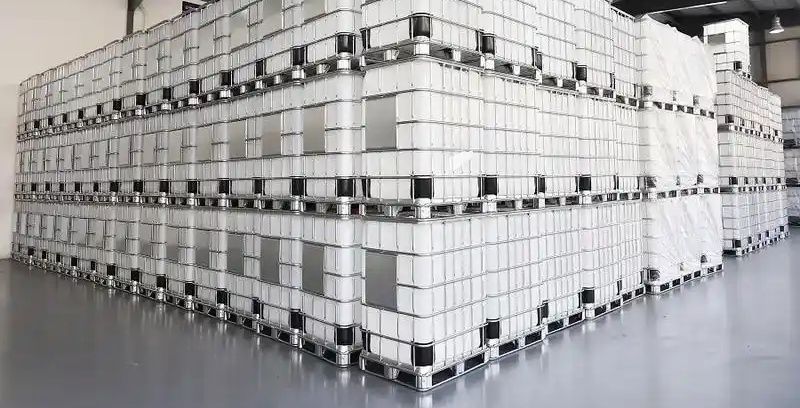
A fully automatic IBC machine is an all-in-one intelligent production system that integrates frame forming, automatic welding, assembly and online quality inspection into one workflow. The whole process runs automatically with almost no manual participation, making it the top choice for large factories pursuing high output and stable standardization.
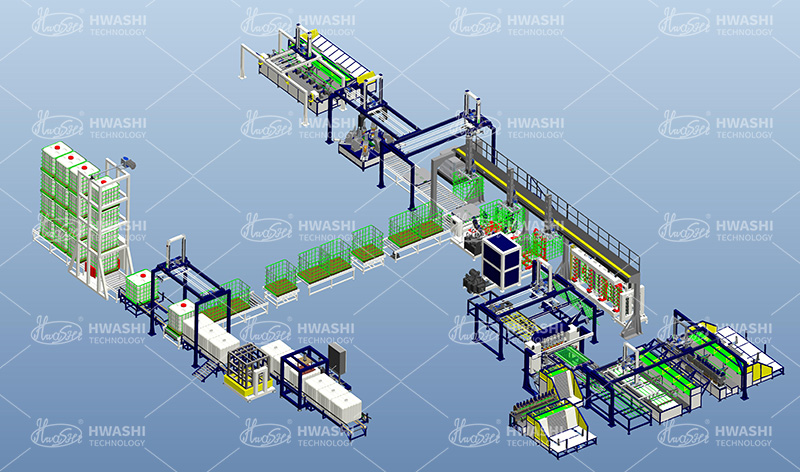
Fast Output Capacity: Continuous round-the-clock operation greatly boosts daily production volume.
Stable Uniform Quality: Robotic welding and precise forming avoid manual errors, keeping every IBC container in consistent standard.
Labor Cost Saving: Dramatically cuts down workshop workers and lowers long-term operational expenditure.
Intelligent PLC Control: Equipped with modern control systems for real-time data monitoring, parameter adjustment and fault alarm.
Less Material Loss: Optimized process flow reduces raw material waste and defective product rate.
Overall production capacity increased by 40% to meet growing bulk orders
Defective product rate dropped by 35%
Workshop labor cost reduced by half
The client successfully achieved mass standardized production while maintaining top-tier product quality.

Affordable Initial Budget: Much lower investment compared with full-automatic production lines.
Strong Production Flexibility: Easy to adjust specifications and handle customized IBC container orders.
Simple Daily Maintenance: Fewer complex automatic parts, easy maintenance and low after-sales cost.
Production efficiency raised by 30%, shortening order delivery cycle
Reduced dependence on experienced welders, easing local labor shortage pressure
Improved finished product consistency to meet international packaging standards
| Item | Fully Automatic IBC Line | Semi-Automatic IBC Line |
|---|---|---|
| Production Speed | High speed, continuous mass output | Medium speed, batch production |
| Labor Demand | Very few workers required | Need skilled manual operators |
| Quality Stability | Highly stable and uniform | Slight deviation from manual operation |
| Startup Cost | High investment | Budget-friendly cost |
| Order Flexibility | Fit for standard mass orders | Good for custom & small-batch orders |
| Factory Scale | Large industrial factory | Small and medium workshop |
| Maintenance | Need professional technical support | Simple structure, easy upkeep |
You need stable high-volume output and fast order delivery
You require highly standard welding and container quality
You want to cut long-term labor cost and material waste
Your production is mainly standardized IBC models with few changes
You often receive customized size and structure orders
You have a limited budget and want to control upfront investment
You run a medium or small factory with existing manual assembly teams
You plan to upgrade step by step toward full automation in later years
Founded in 2001 with a registered capital of RMB 10.309 million, Guangdong Hwashi Technology Inc. is a high-tech enterprise specializing in the R&D, manufacturing and sales of automatic welding equipment, with a particular focus on IBC cage manufacturing. Headquartered in Huizhou, Guangdong, the company boasts two manufacturing bases covering a total area of 50,000 square meters, employing around 200 staff including over 20 mechanical and electrical engineers with more than 10 years of industry experience each.


