Views: 0 Author: Site Editor Publish Time: 2026-09-01 Origin: Site

In industrial packaging and logistics, terminology confusion happens constantly. Warehouse professionals frequently use the terms "IBC" and "tote" interchangeably. You often hear them spoken together across supply chains worldwide. However, a distinct technical reality separates these two words. "IBC" stands as a strict regulatory and logistical classification demanding precise engineering. Meanwhile, "tote" acts as a broad colloquialism covering almost any bulk handling container. Misunderstanding this crucial distinction causes significant procurement errors and compliance risks.
We must move past vague naming habits. This article establishes exact definitions for these essential storage units. We provide a concrete framework for evaluating, specifying, and sourcing the right bulk liquid storage. You will learn how to match equipment perfectly to your daily operational needs.
All IBCs can be called totes, but not all totes meet the strict engineering and compliance standards of an IBC.
The term "IBC totes" is the industry standard for pallet-mounted, cage-reinforced containers (typically 275 to 330 gallons).
Choosing between standard water tanks and IBCs comes down to transportability, spatial footprint, and UN/DOT regulatory compliance for hazardous materials.
Procurement decisions should weigh material selection (HDPE vs. stainless steel) against lifecycle ROI and the manufacturer's production tolerances.
To make informed procurement choices, we must first deconstruct the industry vocabulary. Words matter deeply when safety regulations apply. The distinction between an engineered container and a generic bin impacts everything from freight costs to warehouse safety.
An IBC refers specifically to an "Intermediate Bulk Container." Engineers designed this classification for a very specific logistical purpose. It provides intermediate storage falling perfectly between standard 55-gallon drums and massive commercial tanker trucks. True IBCs always feature standardized pallet bases. Manufacturers design these bases specifically for pallet jacks and forklift handling. They adhere to rigid structural standards ensuring safe transport across global supply chains. When a container earns an IBC designation, it meets defined criteria for stress resistance, valve integrity, and load-bearing capacity.
The word "tote" originates simply from the verb meaning "to carry." Over decades, warehouse workers applied this term to almost anything they could carry or move. In many distribution centers, "totes" actually refers to small, open-top plastic picking bins used on conveyor belts. The term carries no regulatory weight. It implies no specific engineering standard. Using this word alone on a purchase order leaves your actual requirements entirely open to interpretation.
Language evolves naturally on the warehouse floor. Workers combined the regulatory term and the slang term to create IBC totes. This hybrid term dominates the market today. It bridges the gap between technical procurement managers and daily forklift operators. Everyone understands what this combined phrase means. It signifies a pallet-mounted, cage-reinforced bulk liquid container.
Why does this vocabulary lesson matter for your daily procurement? It dramatically impacts your liability and operational efficiency. Consider these core decision matrix guidelines:
Specifying an IBC: Guarantees a structural and logistical standard on your purchase order.
Specifying a Tote: Leaves dangerous room for supplier misinterpretation.
Regulatory Protection: Only properly classified containers protect you during Department of Transportation (DOT) audits.
Best Practice: Always use the full acronym "IBC" on official vendor communications. Keep "tote" as an internal conversational shorthand.
Many facilities mistakenly purchase standard water tanks when they actually need engineered bulk containers. You must evaluate form factor, footprint, and application alignment before making a capital investment.
True industrial bulk containers feature a distinct cubical design. They sit upon an integrated pallet base constructed from treated wood, galvanized steel, or heavy-duty plastic. A robust steel cage reinforcement surrounds the inner plastic bottle. Engineers build these units specifically for continuous movement and vertical stacking inside trailer trucks.
Conversely, standard water tanks typically utilize cylindrical or freestanding designs. They lack protective steel cages. Manufacturers build them primarily for stationary storage. Moving a filled standard water tank usually voids its warranty and risks catastrophic structural failure.
Warehouse floor space costs money. The footprint ratio clearly demonstrates the superiority of cubical designs. One standard 275-gallon intermediate container occupies roughly the same floor footprint as four standard 55-gallon drums. However, it holds the volume equivalent of exactly five drums. You gain 55 gallons of storage capacity without sacrificing a single extra square inch of warehouse racking.
Matching the right vessel to the right job prevents premature equipment failure. Consider these operational alignments:
When to choose standard water tanks: Agricultural reserve storage, stationary irrigation systems, and safe non-transport storage for inert liquids.
When to specify industrial bulk containers: Mobile pressure washing rigs, active chemical transport, and highly constrained warehouse racking environments.
Common Mistake: Never mount a stationary water tank to a moving vehicle. The liquid sloshing effect (dynamic load) will easily fracture the unreinforced plastic walls.
Feature | Industrial Bulk Containers | Standard Water Tanks |
|---|---|---|
Primary Design Intent | Transport and dynamic movement | Stationary liquid storage |
Shape | Cubical (space-optimized) | Cylindrical or freestanding |
External Protection | Galvanized steel cage | None (bare plastic) |
Base Integration | Built-in forklift pallet base | Flat bottom (requires solid pad) |
Stackability | High (designed for vertical racking) | None (cannot be stacked) |
Selecting the right container material dictates safety, longevity, and chemical compatibility. The industry relies primarily on two main materials: high-density polyethylene and stainless steel. Each serves vastly different operational lifecycles.
HDPE composite containers dominate the general logistics market. They feature a durable plastic inner bottle protected by an exterior metal grid. They offer exceptional versatility for everyday industrial tasks.
Best for: Single-trip outbound shipments, standard industrial chemical handling, and agriculture. They also work perfectly for food and beverage applications when manufacturers use virgin, FDA-approved resin.
Risk Factor: Polyethylene suffers from ultraviolet (UV) degradation over time. Storing plastic units in direct sunlight causes the bottle to become brittle. Their lifecycle remains inherently limited compared to metal alternatives.
Stainless steel units represent the premium tier of bulk liquid handling. They completely eliminate the plastic inner bottle. Instead, they rely on heavy-gauge welded steel (typically 304 or 316 grade).
Best for: Highly flammable materials, harsh petrochemicals, and pharmaceutical processing. They excel as long-term asset retainment strategies, often boasting a 10+ year operational lifecycle.
ROI Consideration: Stainless steel requires a significantly higher upfront capital expenditure. However, it heavily offsets these initial costs through continuous sanitization, infinite reusability, and extreme physical durability.
Before finalizing any purchase, you must check the specific gravity rating. The United Nations (UN) and DOT assign ratings based on a material's specific gravity. A container rated for a 1.2 specific gravity liquid will fail dangerously if you fill it with a denser 1.9 specific gravity chemical. Always cross-reference your Material Safety Data Sheet (MSDS) against the container's stamped UN rating.
Procurement teams often treat bulk containers as identical commodities. This presents a massive risk. You must actively consider how manufacturers build your containers. Minor variations in manufacturing precision yield major safety consequences.
Inconsistent wall thickness stands as the number one cause of plastic container failure. If a manufacturer uses outdated equipment, the plastic pools unevenly during molding. This creates weak spots near the bottom discharge valve. Additionally, poor cage welding can lead to catastrophic structural collapses during transit. A single failed weld compromises the entire stacking integrity.
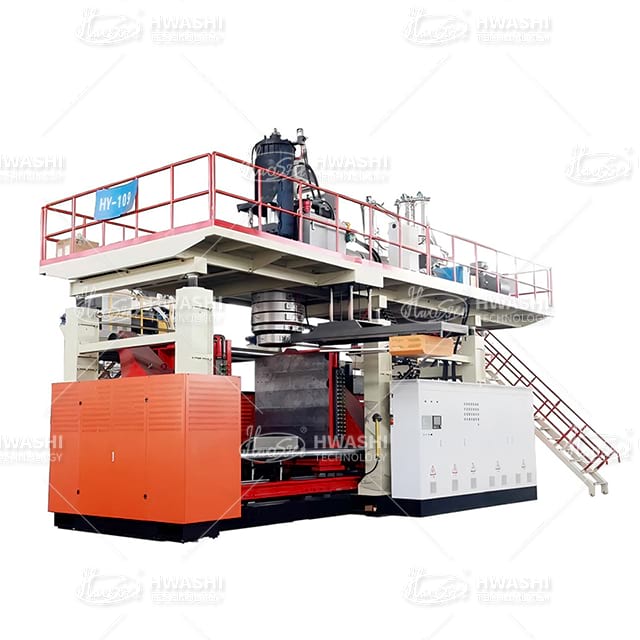
Modern suppliers form HDPE inner bottles through a process called extrusion blow molding. The machinery melts plastic resin into a hollow tube called a parison. A massive metal mold clamps around this tube. High-pressure air then blows into the center, forcing the plastic against the chilled mold walls. This creates the final cubical bottle shape. The precision of this exact moment dictates the container's ultimate strength.
Top-tier suppliers utilize advanced automated machinery to remove human error. An automated IBC machine ensures flawlessly consistent resin distribution across all corners. It guarantees precise valve threading to prevent slow leaks. Advanced machines also integrate automated pressure leak-testing before the bottle ever reaches the steel cage assembly station.
Best Practice for Auditing Suppliers: Look for manufacturers employing robotic cage welding. Hand-welded cages vary wildly in strength. Robotic welding delivers identical penetration and tensile strength on every single joint.
When vetting a large-scale supplier, always ask about their specific machinery. Request details about their IBC Tote Production Line capabilities. Automated, standardized lines yield significantly lower defect rates. Partnering with technologically advanced manufacturers ensures your transport fleet remains DOT-compliant and safe from costly spills.
Evaluating bulk packaging strictly on initial purchase price damages long-term profitability. You maximize your return on investment by strategically choosing the right container condition for the right task.
The market offers three distinct conditions for plastic composite containers. Choosing incorrectly wastes money or risks product contamination.
New: These units feature a brand-new bottle and a brand-new cage. They remain absolutely essential for food-grade products, pharmaceuticals, drinking water, and highly sensitive specialty chemicals.
Rebottled: This condition offers a clever cost-saving middle ground. Suppliers take a used, structurally sound metal cage and insert a brand-new plastic bottle. You get the purity of a new interior combined with the discounted price of recycled steel.
Washed/Reconditioned: These units feature a professionally washed used bottle inside a used cage. They prove highly viable for waste fluid collection or non-sensitive industrial lubricants. However, they carry severe cross-contamination risks for sensitive chemicals.
Integrating standardized bulk containers into your workflow reduces peripheral expenses. They lower daily labor costs significantly. A forklift operator can move 275 gallons of liquid in a single motion. Moving that same volume in traditional drums requires handling five separate units. This reduces loading dock time by nearly 80 percent.
Furthermore, they lower freight costs through optimized truckload geometry. The cubical shape leaves zero wasted space inside a standard 53-foot dry van trailer. You ship more actual product and less empty air. This geometric efficiency dramatically improves your outbound logistics ROI over time.
Navigating industrial packaging requires precise vocabulary and stringent evaluation. The acronym "IBC" dictates the strict engineering standard, while "tote" serves merely as casual slang. Recognizing this difference protects your operation from regulatory fines and dangerous equipment failures.
Your decision-making process must focus entirely on transport needs, spatial geometry, and material compatibility rather than naming conventions. Whether you select virgin HDPE plastics or long-lasting stainless steel, the manufacturing quality ultimately dictates your safety. Insist on containers produced via modern, automated extrusion blow molding.
Take immediate action today. Audit your current liquid handling processes. Request updated specific material data sheets (MSDS) from your chemical providers. Cross-reference those sheets against the specific gravity ratings of your current packaging. Finally, demand structural specifications and production line capabilities from your packaging suppliers to ensure absolute compliance.
A: Standard industrial units feature a globally recognized base footprint of 40 inches by 48 inches. This precisely matches standard shipping pallets. The height varies based on capacity. A standard 275-gallon unit stands approximately 46 inches tall. A larger 330-gallon variant maintains the exact same base footprint but increases in height to roughly 53 inches.
A: Yes, you can stack them safely. However, you must observe strict limits. For static warehouse storage, you can generally stack them 2 to 3 units high. During dynamic transport inside a moving trailer, you should rarely exceed 2 units high. Always factor in the specific gravity of the liquid and the integrity of the bottom steel cage.
A: Absolutely not. Standard industrial units often utilize recycled plastics or non-food-grade resins. To safely store drinking water, you must purchase units explicitly manufactured using BPA-free, food-grade virgin HDPE. Furthermore, you must never use a reconditioned or washed container for potable water due to extreme toxicity risks.
A: A standard plastic composite unit typically lasts between 2 to 5 years. The lifespan depends heavily on environmental factors. Direct UV exposure degrades the plastic rapidly. Harsh chemical interactions and frequent rough forklift handling also accelerate wear. Once the plastic becomes cloudy or brittle, you must immediately remove the unit from active transport service.