Views: 0 Author: Site Editor Publish Time: 2026-08-24 Origin: Site

IBC stands for Intermediate Bulk Container. You see them everywhere across modern supply chains. They act as the absolute backbone for bulk fluid transport. The "Intermediate" designation reveals their specific volumetric purpose. They fit neatly between standard 55-gallon shipping drums and massive intermodal tank containers. Why does this matter? Standardizing your liquid storage drives massive business impact. You can drastically reduce logistics overhead. You mitigate costly contamination risks. Facilities immediately optimize their warehouse footprint. This guide moves beyond basic industry definitions. You will dive into a technical evaluation of modern container deployment. We explore the critical economic tipping point for scaling operations. You will understand exactly when to shift from passive procurement to active in-house manufacturing using an industrial-grade IBC machine. We lay out the exact data you need to make confident, profitable packaging decisions.
Definition & Scope: IBC stands for Intermediate Bulk Container, the global standard for safely transporting semi-bulk liquids, powders, and granulated materials.
Cost Efficiency: Transitioning to IBC totes improves cube utilization by up to 25% compared to cylindrical drums, driving immediate freight and storage ROI.
Compliance & Safety: Enterprise-grade IBCs meet strict UN/DOT certifications for hazardous materials, requiring precise material engineering and testing.
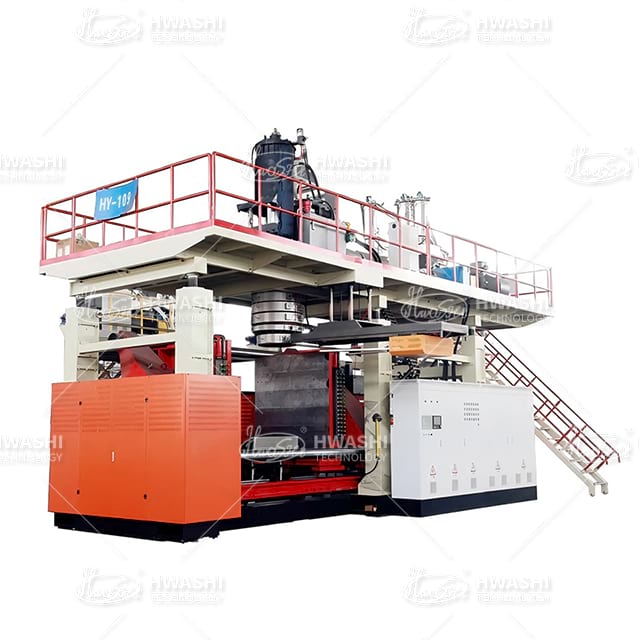
Scaling Production: High-volume consumers often achieve lower Total Cost of Ownership (TCO) by investing in an IBC Tote Production Line to bring container manufacturing in-house and eliminate supply chain bottlenecks.
Every standard composite intermediate bulk container relies on a highly engineered, three-part structural design. This precise engineering provides maximum durability during transit. It also ensures safety during high-rack warehousing. We can break down the core anatomy into three distinct components.
The Inner Receptacle: Manufacturers use high-density polyethylene (HDPE) to blow-mold this rigid inner bottle. HDPE offers exceptional chemical resistance. It prevents leaching and maintains structural integrity under extreme temperatures.
The Galvanized Steel Cage: A tubular steel grid surrounds the plastic bottle. This metal exoskeleton absorbs physical impacts. It allows warehouse teams to stack full containers up to four units high safely.
The Integrated Pallet Base: The cage bolts directly onto a rigid base. Manufacturers form these bases from steel, heavy-duty plastic, or treated wood. This base anchors the entire unit.
Space optimization remains the primary driver for adoption. Traditional cylindrical drums waste significant floor space. They leave empty triangular gaps when grouped together. Composite containers solve this geometric problem entirely. The cube-shaped design maximizes every square inch of available trailer and warehouse space.
Dimensions and Space Optimization Metrics
Container Type | Volume Capacity | Base Dimensions (Inches) | Standard Pallet Compatibility |
|---|---|---|---|
Standard 275-Gallon | 1,040 Liters | 48" x 40" | Direct match (Flush fit) |
High-Capacity 330-Gallon | 1,250 Liters | 48" x 40" (Taller profile) | Direct match (Flush fit) |
55-Gallon Drums (Qty 4) | 220 Gallons Total | Approx. 48" x 48" | Overhangs standard pallet |
Standardized handling further cements their industry dominance. The 48-inch by 40-inch base dimensions exactly mirror standard North American and Euro pallets. Forklifts and standard pallet jacks can easily engage the base from all four sides. This universal compatibility enables seamless integration into existing material handling workflows. Your operators do not need specialized lifting attachments to move them.
Companies typically begin their container journey through procurement. They purchase pre-assembled units from external packaging distributors. This model works perfectly for low-volume operations. However, successful companies eventually hit a critical procurement threshold. When container consumption spikes, purchasing external units becomes a major financial liability. You end up paying exorbitant freight rates simply to ship empty air.
Hitting this volume threshold builds the business case for vertical integration. Establishing an on-site IBC Tote Production Line transforms your operational dynamics. The financial triggers are clear. If your facility consumes tens of thousands of containers annually, your inbound freight costs likely exceed the actual material value of the plastics. Bringing production inside your four walls eliminates these wasteful logistics expenses entirely.
You must prepare your infrastructure before launching in-house manufacturing. An internal production setup requires dedicated floor space. You need industrial water chillers for rapid plastic cooling. You must install high-pressure air compressors. Raw material silos are necessary for storing bulk HDPE resin pellets. Beyond the financial returns, vertical integration acts as a powerful risk mitigation tool. You protect your facility from external packaging shortages. You insulate your output from global supply chain shocks.
Selecting the right blow molding equipment dictates your long-term success. You must evaluate technical specifications rigorously. Advanced parison control is non-negotiable. This technology uses a 100-point programmable controller to dictate exact plastic thickness during extrusion. It ensures strong corners and reduces plastic waste. Look closely at clamping force. You need immense hydraulic pressure to hold the mold closed during the blowing phase. Modern machinery delivers incredible energy efficiency metrics. Servo-driven hydraulic systems consume far less electricity than legacy equipment. They operate faster, run quieter, and yield highly consistent wall thickness.
Transporting industrial fluids carries heavy regulatory scrutiny. You cannot cut corners regarding compliance. Enterprise-grade containers must meet strict United Nations (UN) and Department of Transportation (DOT) standards. These frameworks ensure hazardous materials survive severe transit accidents safely.
Every approved container design undergoes brutal physical testing. The drop test is mandatory. Testers fill the container to its maximum weight capacity. They drop it from varying heights onto an unyielding surface. The inner plastic receptacle must not rupture or leak. Next comes the vibration test. The unit sits on a specialized shaker table for one hour. This simulates the constant rattling of highway transport. Finally, engineers conduct hydrostatic pressure tests. They force internal water pressure to specific kPa levels for ten minutes. The bottom discharge valve and top fill cap must remain completely sealed.
Material integrity determines test success. You must utilize high-molecular-weight HDPE resin. Standard commercial plastics will fail. UV stabilization is another critical factor. Sunlight degrades untreated plastic rapidly. Manufacturers add carbon black or Hindered Amine Light Stabilizers (HALS) into the resin mix. These additives prevent the plastic from becoming brittle during outdoor storage. You must also verify chemical compatibility. Certain aggressive solvents can slowly dissolve incorrect resin blends.
We must strongly differentiate between food-grade and industrial-grade specifications. Storing agricultural fertilizers requires robust physical strength. Storing food syrups requires absolute chemical purity. FDA-approved food-contact containers demand pristine manufacturing hygiene. You can only use 100% virgin HDPE resin for food applications. Regrind or recycled plastics are strictly prohibited. The facility must maintain rigorous traceability records. Every batch of resin requires documentation linking it to a specific finished container.
Transitioning to active manufacturing introduces new operational challenges. Quality Control (QC) bottlenecks represent the most common hurdle. Ramping up a new production line requires meticulous equipment calibration. If your operators fail to program the parison controller correctly, the container will suffer from uneven wall thickness. Thin corners create immediate burst risks. You must also strictly monitor valve installations. A perfectly blown bottle is useless if the bottom butterfly valve leaks due to incorrect torque application.
Lifecycle management requires a cohesive strategy. These containers are rarely single-use items. You must design a robust reverse logistics program. Cross-contamination prevention stands as your highest priority. You must deploy high-pressure washing stations to clean returned containers thoroughly. Mixing incompatible chemical residues causes dangerous reactions. Cage reconditioning is equally important. Forklifts will inevitably bend the metal bars over time. Your team must inspect, straighten, or replace damaged cages before authorizing a refill.
Evaluating the financial breakpoint requires careful CapEx versus OpEx modeling. Purchasing heavy blow molding equipment demands significant capital expenditure upfront. Conversely, signing a long-term supply contract for pre-assembled units drains your operational expenses steadily over time. You must calculate the exact break-even timeline. Compare the depreciated cost of the machinery, raw resin prices, and labor against the landed cost of buying external units. For high-volume chemical plants, this break-even point often arrives much faster than executives anticipate.
Your equipment vendor acts as your primary partner in this transition. You must assess their engineering expertise deeply. Do not base your decision solely on the initial machine price. Look closely at their installation support capabilities. Will they send technicians to your facility to commission the line? Operator training is vital. Your staff needs hands-on instruction to manage the extrusion processes safely. Verify local parts availability. If a hydraulic pump fails, waiting weeks for overseas shipping will cripple your output.
Always demand proof of concept before signing purchase orders. You must review Factory Acceptance Testing (FAT) data. The vendor should run the machine at their facility first. They must produce a batch of containers using your specific resin. You evaluate the dry cycle times. You measure the container weight consistency across fifty consecutive units. If the machine cannot hold tight tolerances during the FAT, it will fail in your facility.
Decision-makers should follow clear next steps. First, audit your current annual container expenditure. Quantify exactly how much you spend on inbound freight for empty units. Determine your scrap rate for damaged rentals. Next, request customized ROI modeling from established equipment manufacturers. A properly sized IBC tote production setup shifts packaging from a sunk operational cost to a tightly controlled, highly profitable asset.
We have established that while the design is fundamentally simple, its implementation dictates massive operational efficiency. You can optimize your supply chain instantly by moving away from outdated 55-gallon drums. The transition reduces freight waste and maximizes your warehouse cube utilization.
Keep these critical next steps in mind as you scale:
Analyze Your Freight Spend: Identify exactly how much capital you lose by shipping empty containers to your filling lines.
Audit Material Requirements: Define your specific regulatory needs, separating strict food-grade resin requirements from standard industrial chemical profiles.
Evaluate Vertical Integration: Compare the long-term cash flow of passive container procurement against the strategic advantages of manufacturing them internally.
Demand Rigorous Testing: Never accept blow molding equipment without a successful Factory Acceptance Test proving consistent wall thickness and cycle times.
High-volume operations can no longer afford to treat packaging as a passive expense. Transitioning to active manufacturing puts you in total control of your supply chain. We invite engineers and procurement managers to schedule a technical consultation today. Request detailed ROI modeling for in-house manufacturing equipment and secure your packaging independence.
A: The term "Intermediate" signifies its specific volumetric placement. It bridges the large gap between small, manually handled 55-gallon drums and massive, thousands-of-gallons ISO tanks. Engineers designed them specifically for mechanized handling, allowing facilities to move semi-bulk quantities efficiently.
A: You can safely store industrial chemicals, pharmaceuticals, liquid food syrups, agricultural fertilizers, and petrochemicals. However, safety depends entirely on material compatibility. You must match the specific chemical profile to the correct HDPE resin grade and select appropriate valve gasket materials (like Viton or EPDM).
A: A complete manufacturing line requires a substantial footprint. You must allocate realistic space for the blow molding machine, automated cooling stations, cage assembly areas, and raw resin silos. Most standard configurations require a minimum of 3,000 to 5,000 square feet of dedicated, high-ceiling factory space.
A: No. There is a strict distinction between standard non-hazardous units and UN-certified units. UN-rated containers undergo severe drop, vibration, and hydrostatic pressure testing. They require thicker walls and tighter manufacturing tolerances to pass these certifications and legally transport hazardous chemicals.